
Scaling Robotaxi: Pony.ai CFO Leo Wang on Unit Economics, Europe and What Comes Next
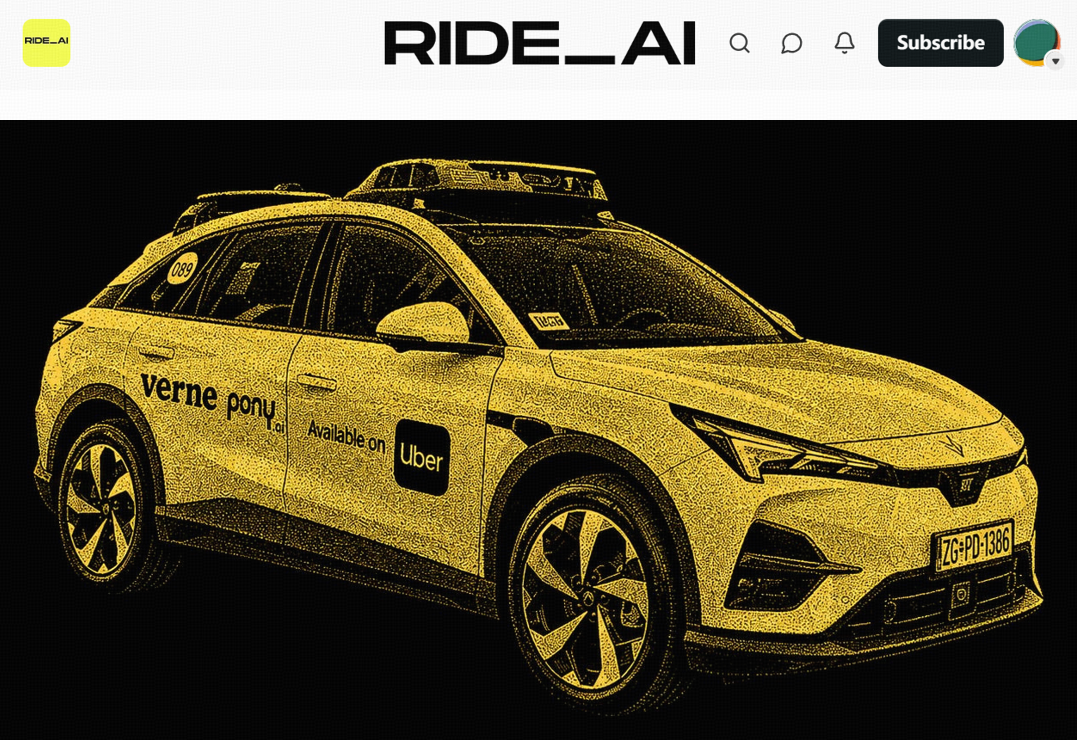
In a recent episode of the Ride AI podcast, Pony.ai co-founder and CFO Leo Wang joined host and Ride AI editor-in-chief Sophia Tung for a wide-ranging conversation on what it takes to scale Robotaxi from technology into a sustainable transportation service.
Leo discussed Pony.ai’s progress in scaling Robotaxi operations, including unit economics breakeven in Guangzhou and Shenzhen, the continued expansion of its Gen-7 fleet, and strong growth in paid Robotaxi services. He also shared how fleet scale, vehicle density, continued cost reduction and AI-driven development could support the next stage of growth.
The conversation also turned to Pony.ai’s international expansion. Leo reflected on fully driverless test rides with Verne in Zagreb, how Pony.ai’s joint deployment model brings together autonomous driving technology, user demand and local fleet operations, and how that experience helped lay the groundwork for the company’s plan with Uber to deploy more than 2,000 Robotaxis across Europe. He also shared his view on where the Robotaxi industry could be heading over the next six to 12 months.
The following conversation has been edited and condensed for clarity and readability.
From Engineering to Economics
Ride AI: Your background is in engineering. How does that shape your work as CFO?
Leo Wang: My PhD work focused on map data and location-based services — for example, how to efficiently find a point of interest such as the nearest gas station along a route. That led me into large-scale data processing at IBM and later into mapping and localization for autonomous driving.
When we founded Pony.ai, there were very few of us, so everyone worked across different areas as the company evolved. Over time, I moved into broader management roles and eventually into finance.
That technical background is still very useful as CFO. Robotaxi is at an early stage of commercialization, so today’s financial numbers only tell part of the story. Investors also need to understand the underlying trajectory — why certain technology investments need to be made upfront, how they improve the product and operations, and how they can generate returns over the mid- to long term.
Ride AI: How does Pony.ai plan to bring hardware costs down further?·
Leo Wang: There are three major factors.
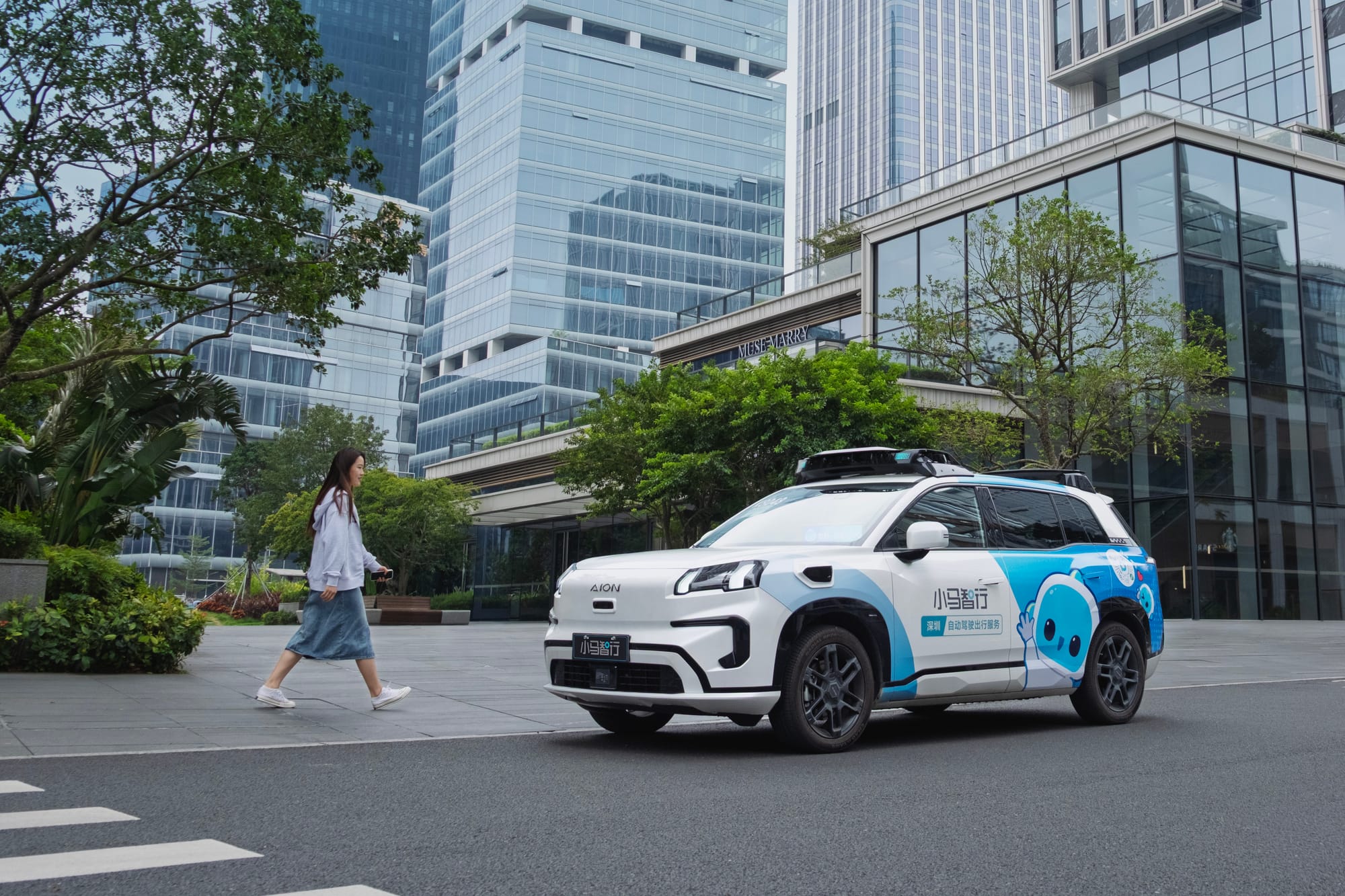
The first is the supply chain. Electric vehicles have become increasingly mature and more cost-efficient, and the same is true for sensors. Our Gen-7 system uses nine LiDARs, but LiDAR costs in China today are only a fraction of what they were several years ago.
The second is scale. Previous generations were produced in the hundreds. With Gen-7, we began talking to suppliers about volumes in the thousands. As more Gen-7 vehicles are deployed across different cities and markets, suppliers have greater confidence in that scale, which also gives us more room to optimize costs.
The third is rapid iteration. With more than 1,000 vehicles operating on a daily basis, we have real-world data showing us where hardware can be simplified while maintaining the same safety and reliability requirements. That gives us confidence that we can continue reducing BOM cost as Gen-7 evolves.
Building the Economics of Scale
Ride AI: Your robotaxi revenue grew 691.2% year over year in the second quarter. What drove that growth?
Leo Wang: The first factor is fleet size. In the second quarter of 2025, Gen-7 was still in development, and only a few hundred Gen-5 and Gen-6 vehicles were providing public service. Since then, our total Robotaxi fleet has grown to nearly 2,000 vehicles.
The second factor is density. If you only have a few dozen vehicles in a city, waiting times can be long and the service is less attractive to riders. Robotaxi is similar to ride-hailing in that density matters a lot.
As vehicle density improves, service quality improves. That helps bring more repeat users, which in turn makes demand and revenue more consistent. More vehicles improve the service, and better service supports further revenue growth.
Ride AI: What does PonyWorld 2.0 do, and why does it matter for scaling?
Leo Wang: Safety becomes an even bigger challenge as a Robotaxi fleet scales. Even if the probability of an incident is already very low, deploying significantly more vehicles means safety performance has to continue improving.
That means addressing the remaining corner cases. But there are many different types of corner cases, so the important question is which ones should be prioritized in a particular operating environment to generate the greatest improvement in safety.
Traditionally, that analysis could require a large number of people reviewing data and identifying where engineering resources should be focused. We believe AI can increasingly perform that analysis — identifying weaknesses, prioritizing the most relevant scenarios and guiding further iteration.
That is an important part of PonyWorld 2.0. It allows us to improve the technology more efficiently without having to scale human QA resources at the same rate as the fleet.
Taking Growth Model Global
Ride AI: How does the joint deployment model support Pony.ai’s international expansion?
Leo Wang: In overseas markets, our role is very clear: Pony.ai provides the AI driver.
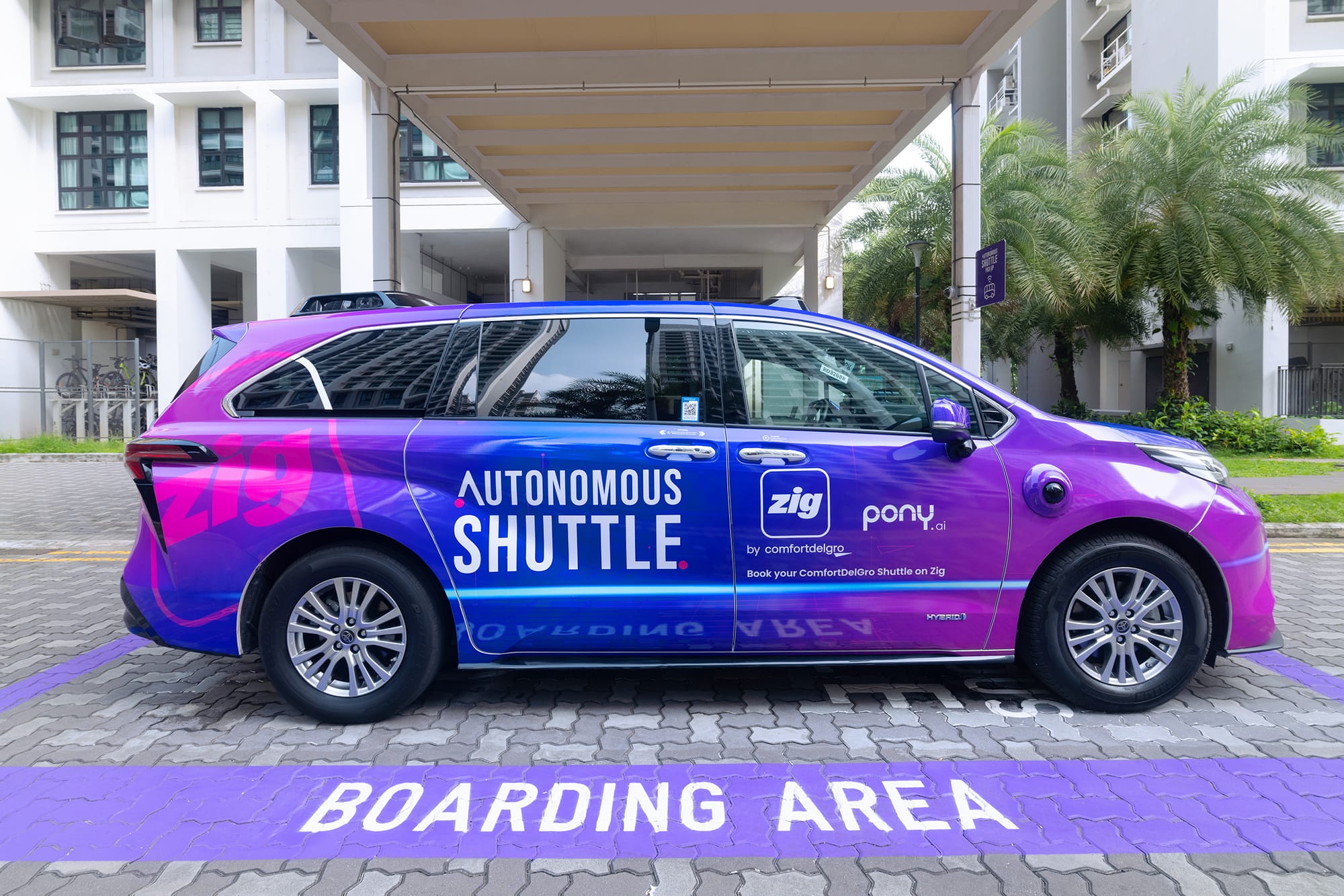
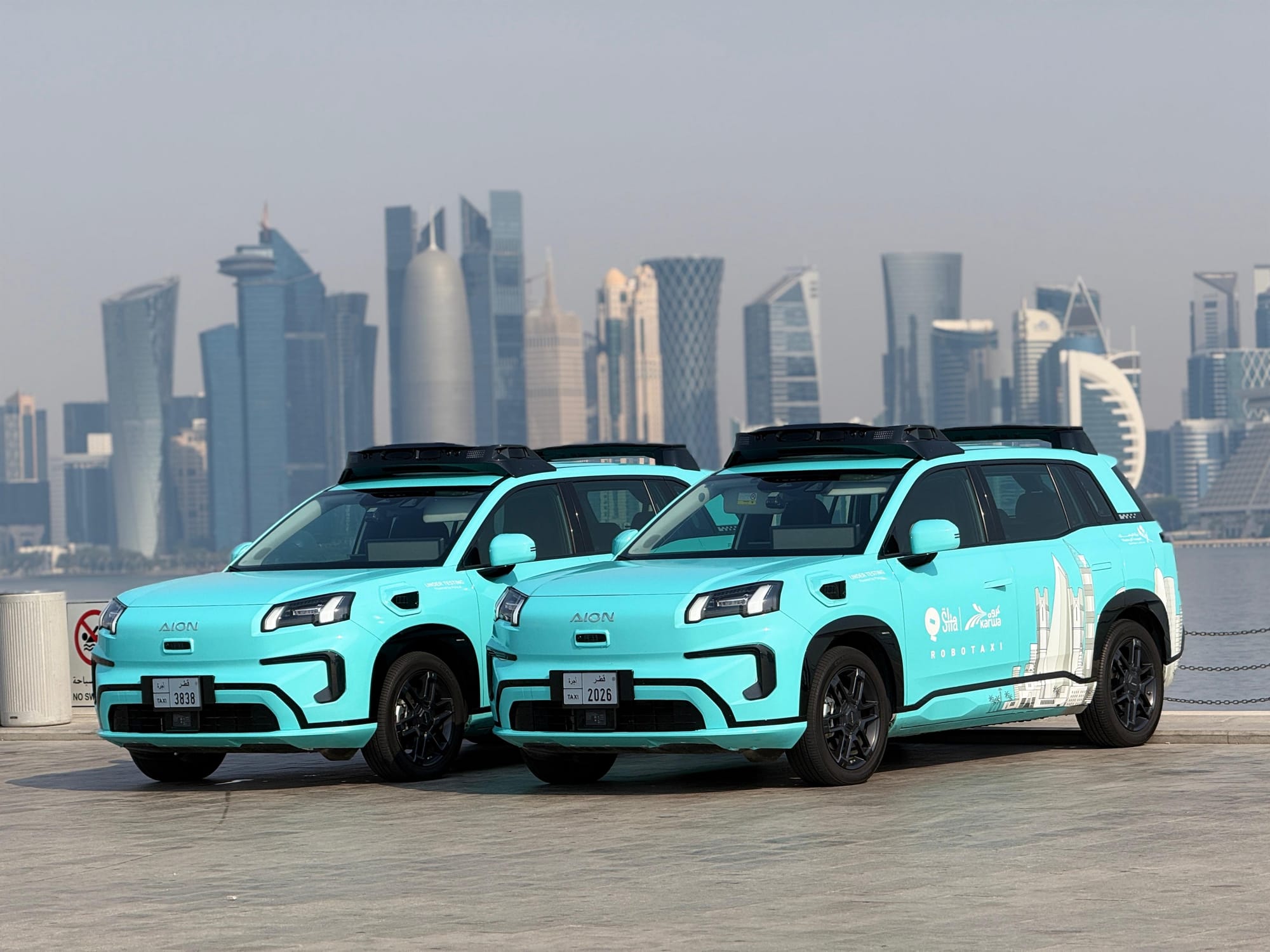
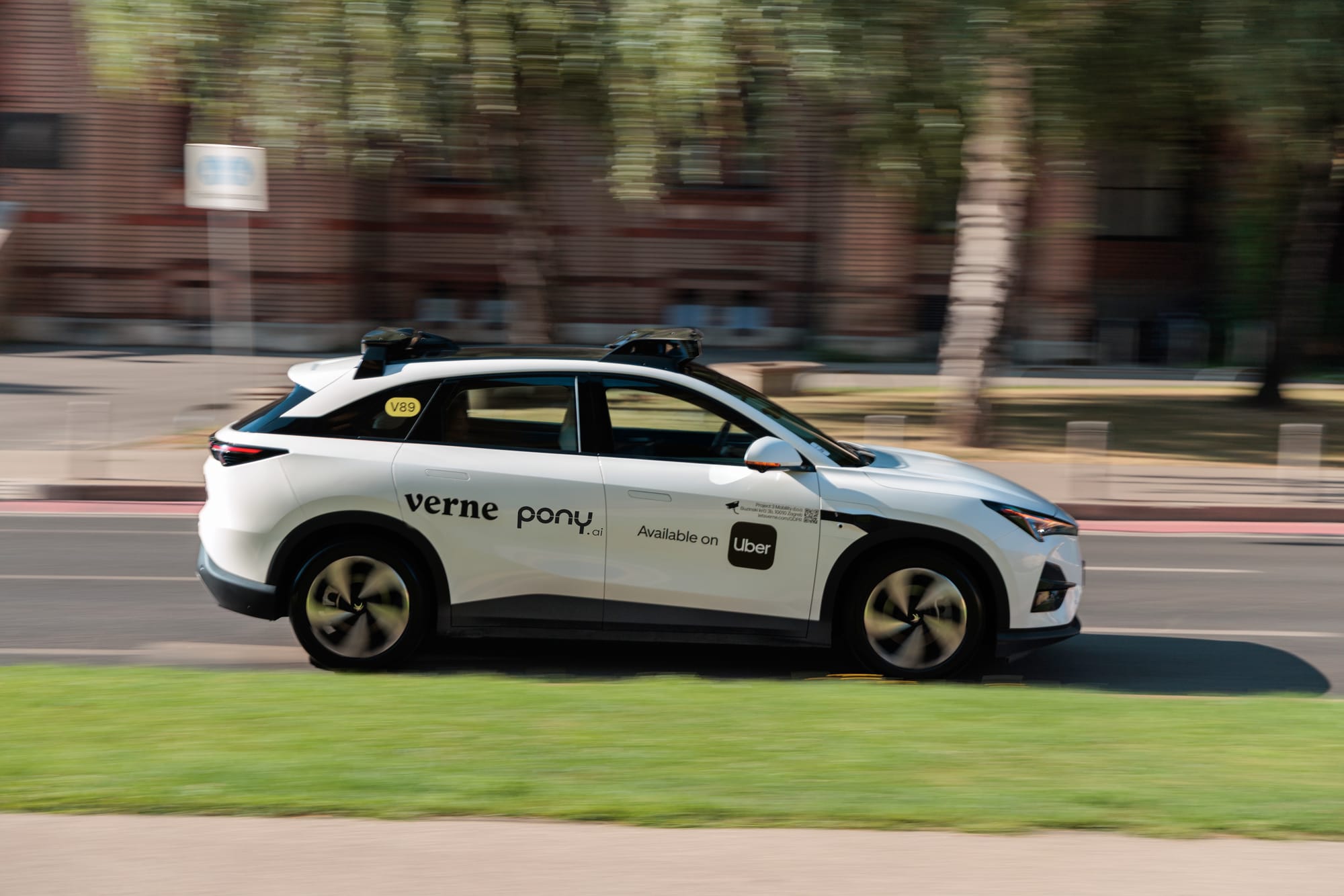
A complete Robotaxi service needs several different capabilities. You need the autonomous driving technology, you need access to rider demand, and you need local fleet operations such as vehicle maintenance, cleaning and charging.
Those roles can be handled by different partners. A ride-hailing platform can provide access to users, while a local operator can manage the fleet. Existing taxi or fleet operators, for example, already have vehicles, depots and operational infrastructure, so they can be natural partners for Robotaxi operations.
Depending on the market, that can be a two-party or three-party structure. Our focus is to provide the AI driver and work with partners that bring the other capabilities needed to operate the service at scale.
Ride AI: What has the Zagreb deployment demonstrated so far?
Leo Wang: One important result is that it showed our AI driver can adapt quickly to a European driving environment.
Infrastructure in European cities can be quite different, particularly in older districts, where roads may be more congested and there can be more cyclists and a mix of old and new infrastructure. Zagreb gave us an opportunity to demonstrate that our technology can operate in that environment while continuing to build a strong safety record.
That experience and safety mileage provide a useful foundation for further expansion in Europe. Working with Verne also allowed both sides to move quickly and reach concrete milestones. The progress in Zagreb helped give partners greater confidence as we moved on to discuss larger opportunities, including our plan with Uber to deploy more than 2,000 Robotaxis across Europe.
From Demonstration to Everyday Service
Ride AI: What should people expect over the next six to 12 months?
Leo Wang: The important transition is from trying a Robotaxi once or twice to using it as a regular service.
A one-off ride is still essentially a demonstration. What matters commercially is whether people come back and use the service repeatedly. Our philosophy has always been to provide a smooth ride — one where passengers can simply focus on whatever they want to do and almost forget about the ride itself.
Over the past 12 months, the industry has already made significant progress, with more vehicles operating in more cities. I expect that scaling to accelerate further over the next six to 12 months. Hopefully, more people will experience Robotaxis for themselves and increasingly see them as part of everyday transportation.