
Pony.ai at Auto China 2026: Global Media Spotlight on L4 Autonomous Mobility
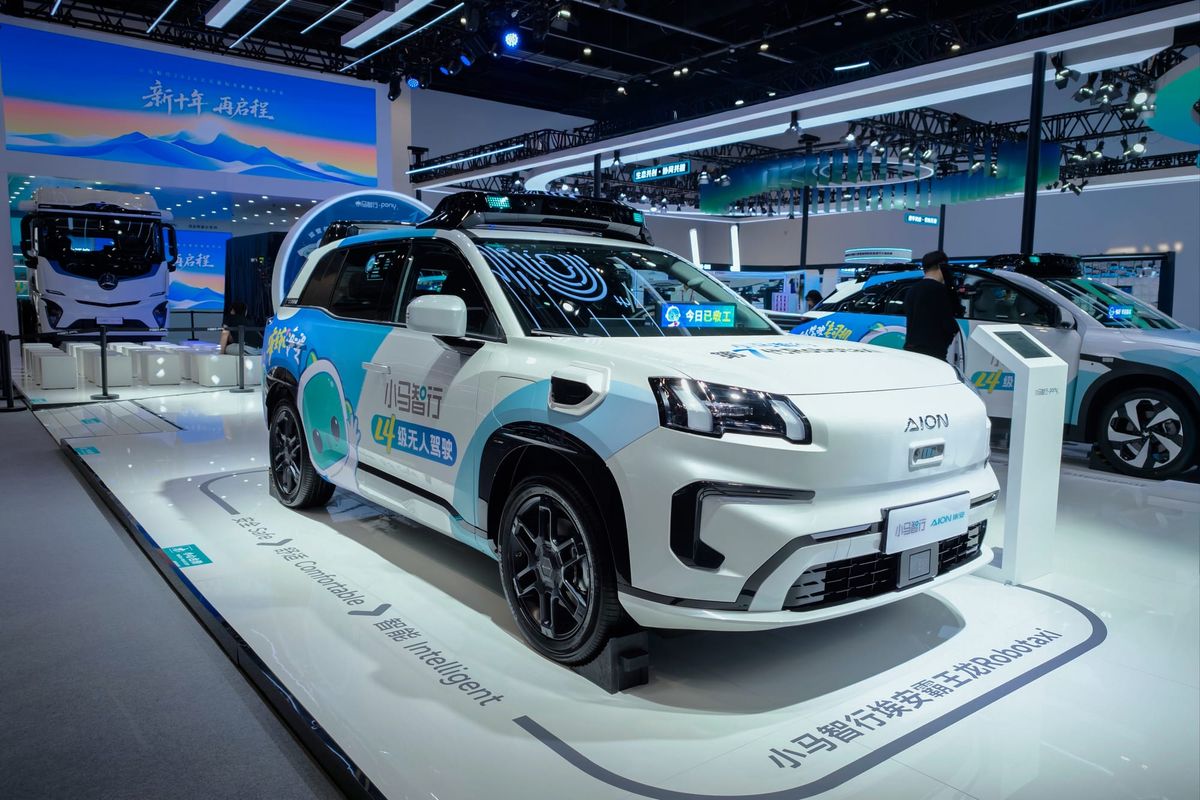
During Auto China 2026 in Beijing, Pony.ai showcased its latest progress in L4 autonomous mobility, drawing broad attention from global broadcasters, international publications, and automotive content creators. From cost reduction and AI innovation to global expansion and safety, the media spotlight reflected growing interest in how fully driverless technology is moving from demonstration to scaled commercial deployment.
Pony.ai Founder and CEO James Peng spoke with leading media outlets on the sidelines of the auto show, sharing insights into the company’s Gen-7 Robotaxi platform, PonyWorld technology, overseas expansion strategy, and the path toward large-scale L4 deployment.
Here is a press digest of what media are saying about Pony.ai and the future of autonomous driving.
Broadcast
CNBC
James Peng on Gen-7 cost reduction and cost advantage
“We have achieved a further reduction of the total vehicle cost by another 20% to 25%. In fact, the whole vehicle, including the car, all components, sensors and compute, is now cheaper than a Tesla Model 3, with costs of around RMB 230,000.”
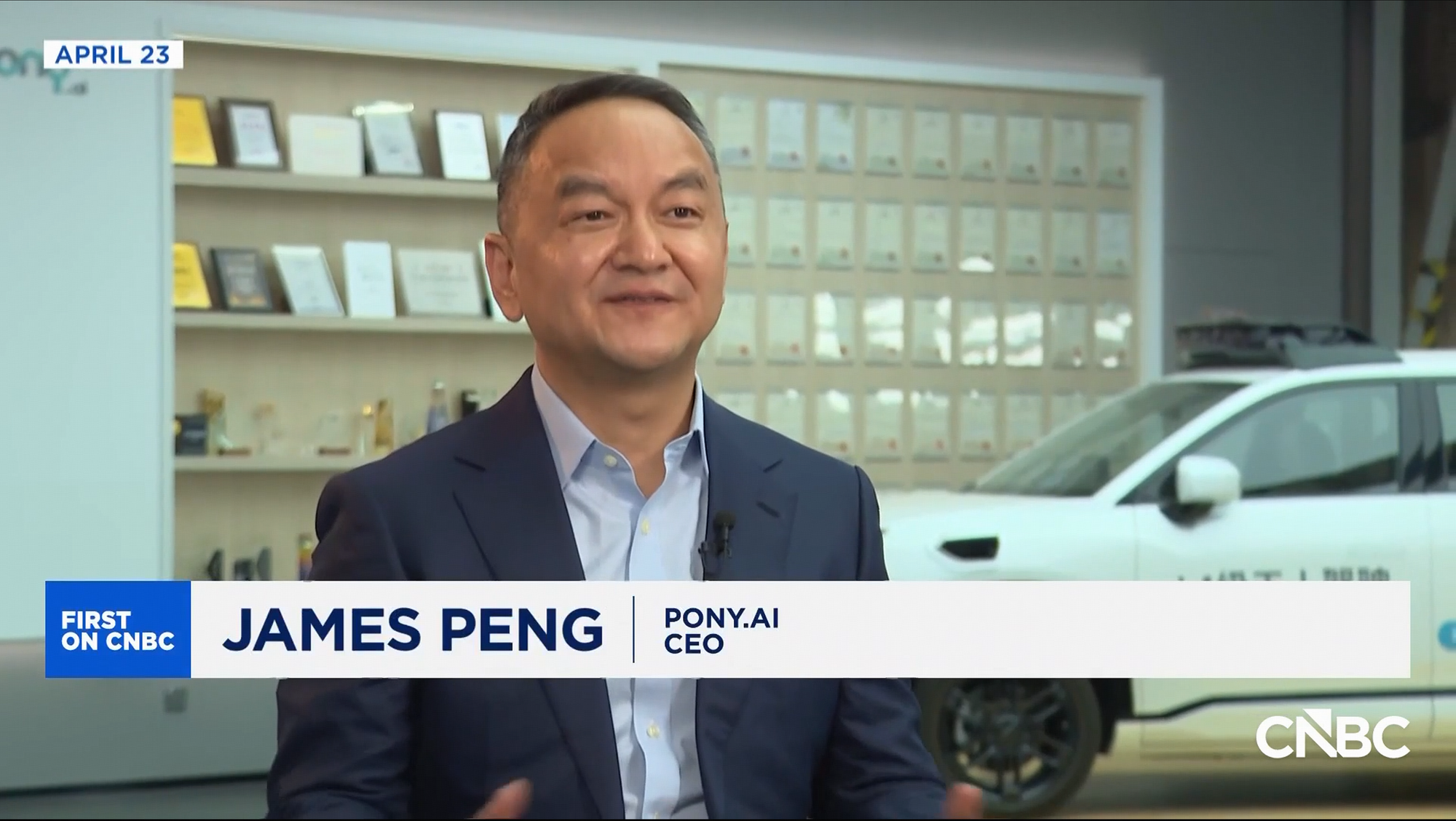
“It is a holistic approach to drive down cost. We work closely with OEMs to streamline the manufacturing process, collaborate with the supply chain to benefit from greater volume and annual price reductions, and continuously improve our software and AI so we can use fewer and more cost-efficient sensors while achieving the same or even higher safety standards.”
CNA
James Peng on PonyWorld and self-evolving AI
“We launched PonyWorld 1.0 about three years ago, enabling vehicles to learn through reinforcement learning by interacting with surrounding traffic participants. With PonyWorld 2.0, we have evolved from reinforcement learning to self-learning: the vehicle can now judge by itself how good its driving is.”
James Peng on the path to large-scale L4 deployment
“All the important factors for large-scale L4 deployment are already in place. There is no single major blocker; it is now an evolution process of producing more vehicles, securing licenses, building facilities, launching to the public and acquiring users. It just takes time.”
Read the CNA full story: Pony.ai CEO says key pieces in place for large-scale robotaxi rollout
Bloomberg
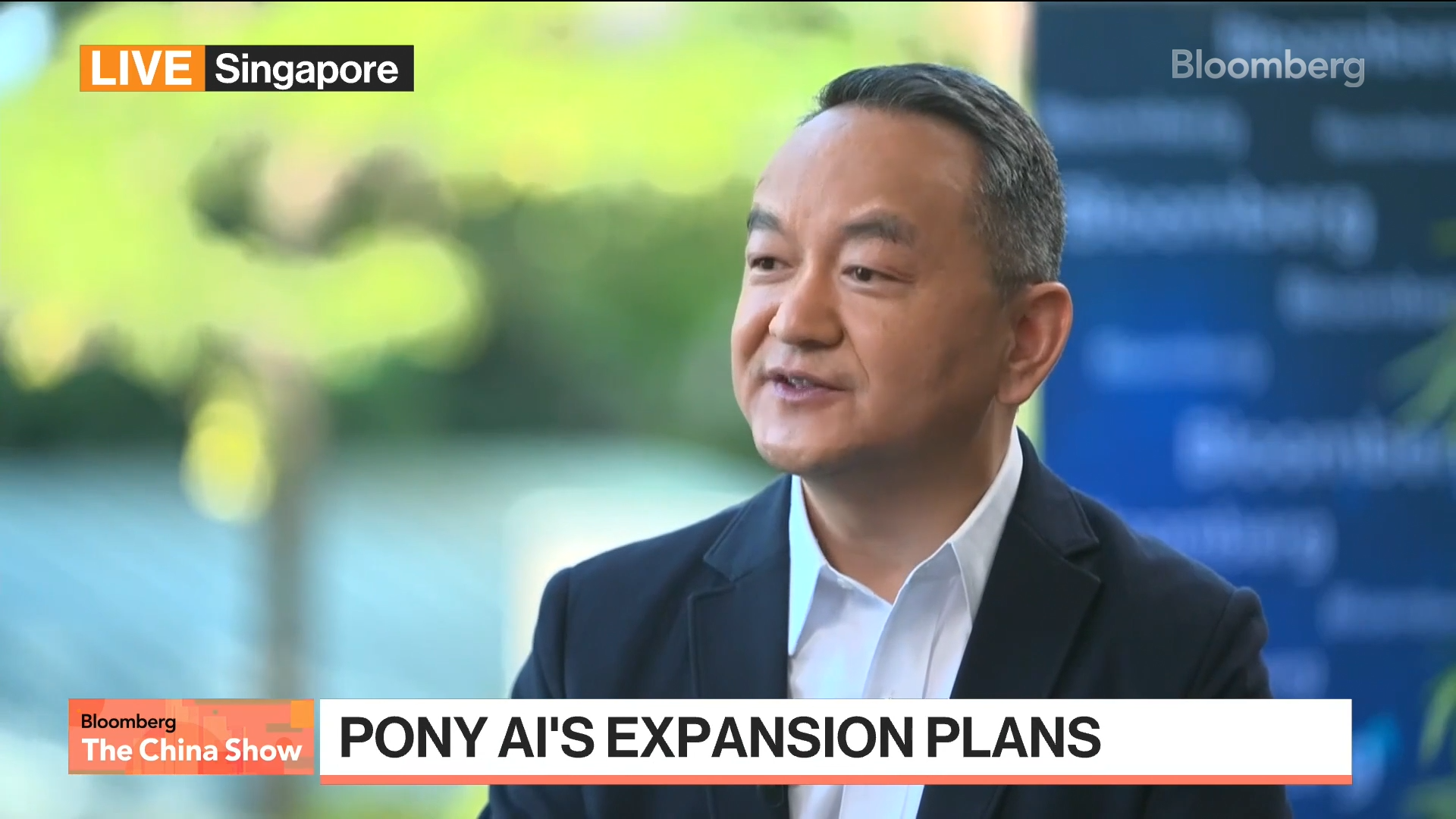
James Peng on global expansion momentum and international demand
“From our experience, we have found that mobility demand is similar throughout the globe. We are looking to expand into core markets including Europe, the Middle East, Singapore and South Korea, and this year alone, we expect to expand into 10 to a dozen cities.”
James Peng on safety and system redundancy
“Safety has always been the cornerstone of our industry, and our company motto is safety first. To mitigate risks, it requires a full-range approach across vehicle safety, risk handling and emergency response. If something happens, the vehicle should still be able to reach a minimum-risk condition, such as pulling over, and the system should be designed with multiple layers of redundancy.”
CNN
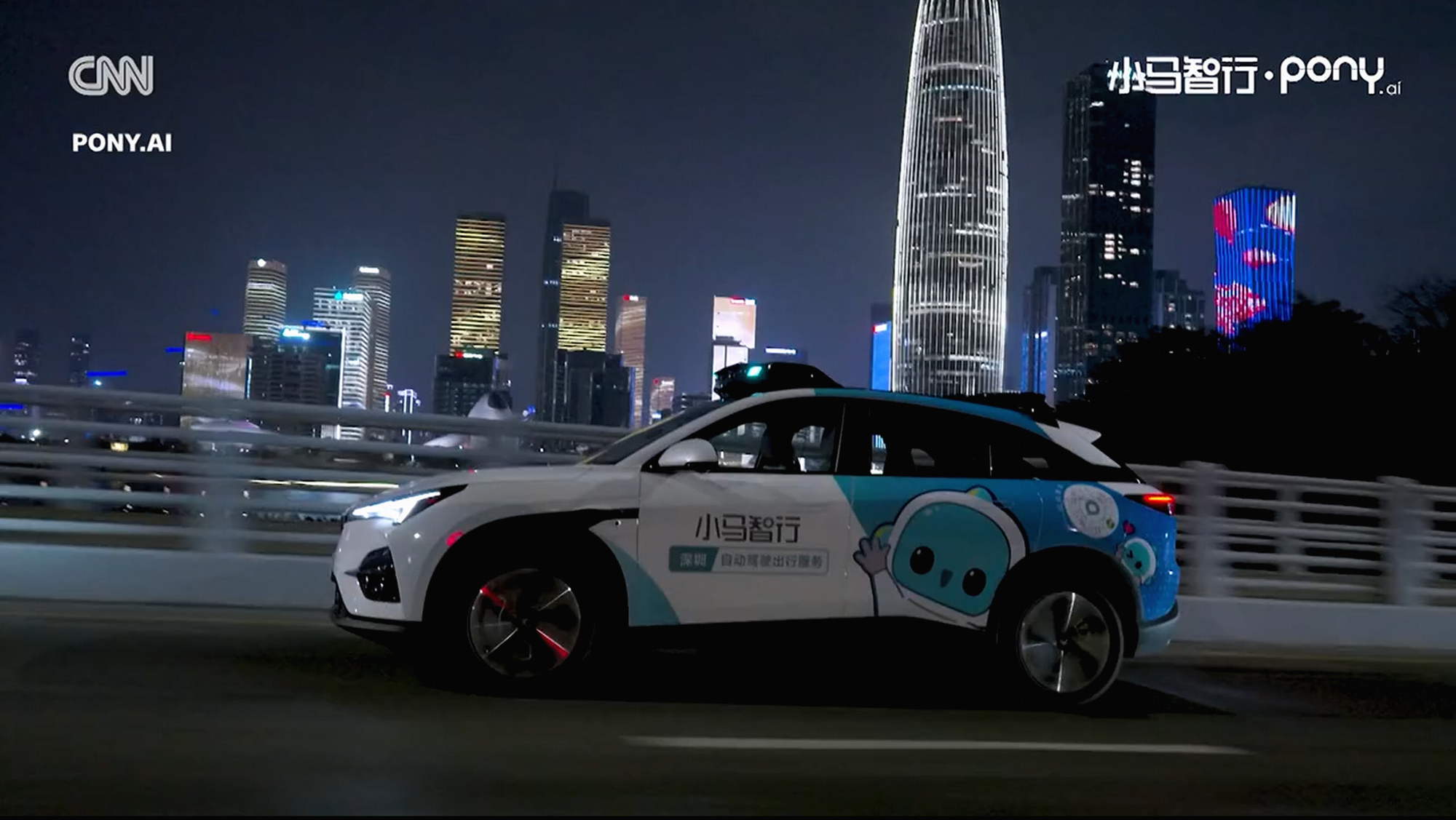
CNN highlighted Auto China 2026 as a key stage for showcasing the rapid progress of China’s EV and autonomous driving industries. The segment featured Pony.ai as a company founded with the vision of building safe, reliable, and efficient fully driverless autonomous mobility solutions.
Print & Online
South China Morning Post
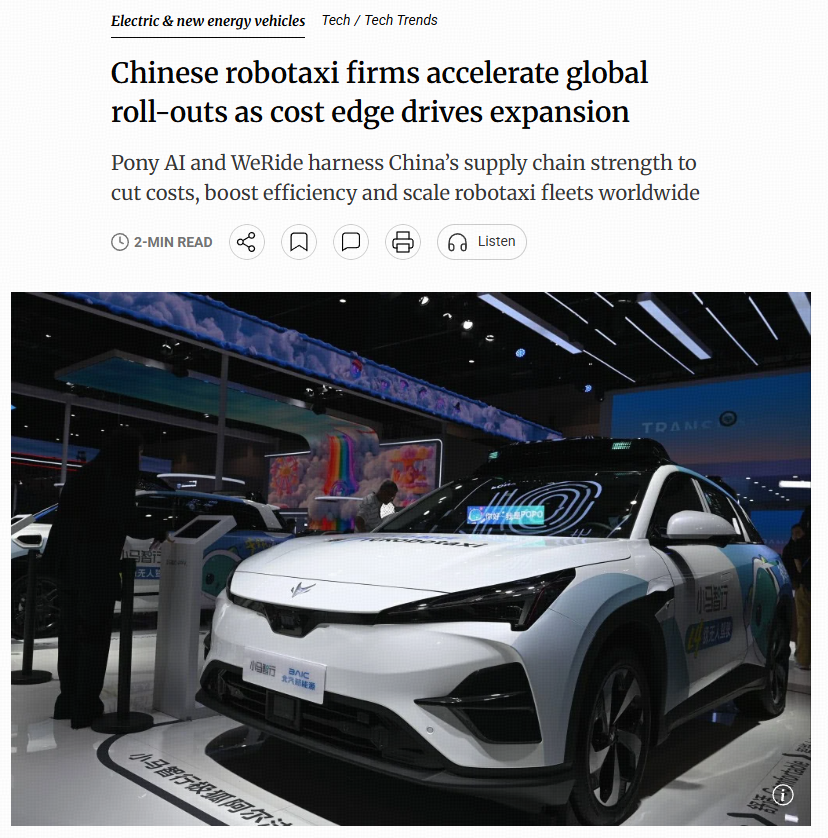
South China Morning Post highlighted how Chinese robotaxi companies, including Pony.ai, are accelerating global expansion with strong supply-chain advantages and growing cost competitiveness. The article positioned Pony.ai as part of a new wave of Chinese autonomous driving companies bringing L4 robotaxi technology to international markets.
AFP
AFP offered a first-hand account of experiencing Pony.ai’s autonomous driving technology in Zagreb, Croatia, where the reporter joined an early ride in Europe’s first commercial robotaxi service operated by Verne in partnership with Uber. The article described the ride experience from a passenger’s perspective, capturing how the vehicle handled real urban roads and offering readers an on-the-ground look at autonomous mobility in action.

Maeil Business
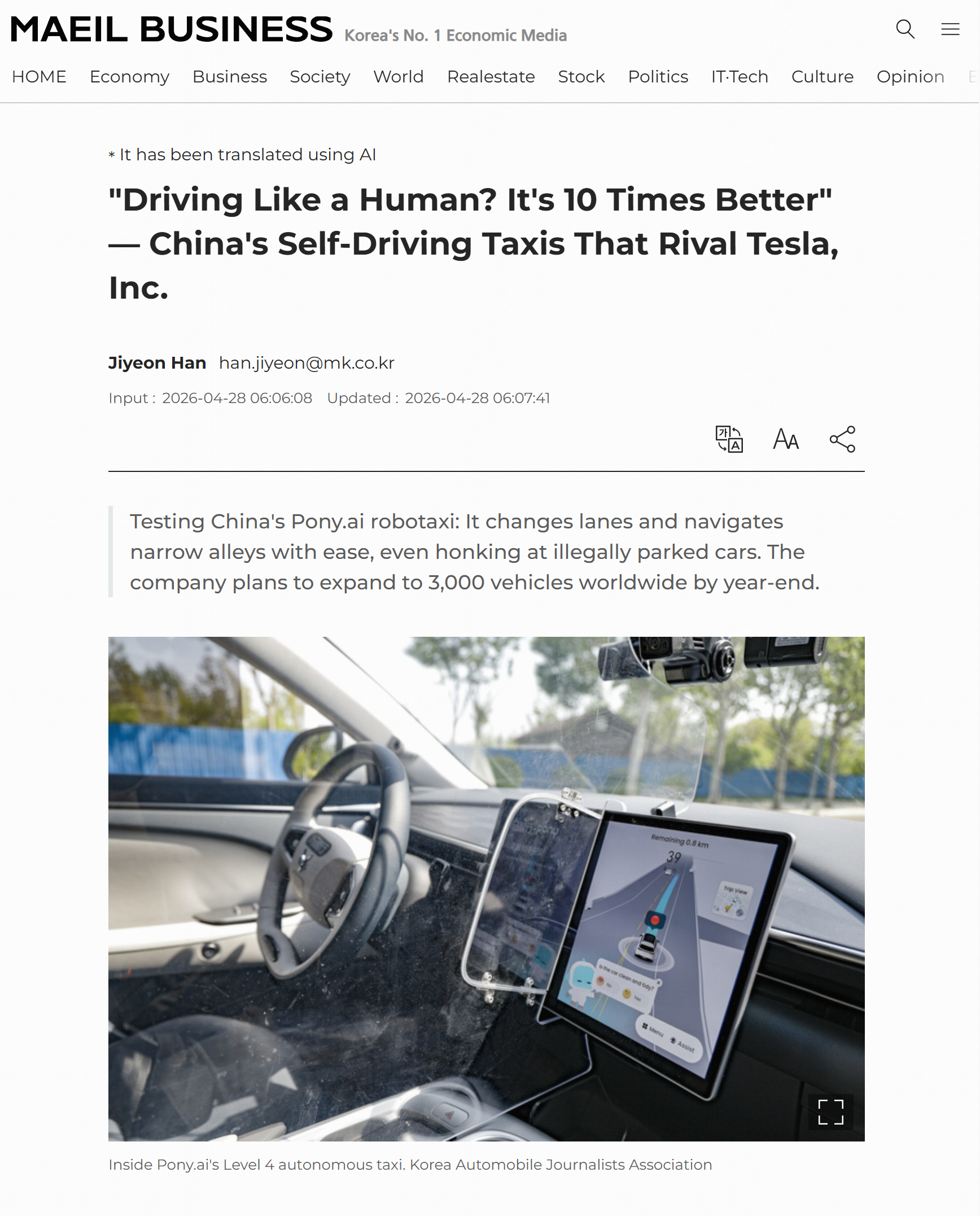
Maeil Business took readers inside a Pony.ai Robotaxi ride in Beijing, with detailed observations on the vehicle’s smooth acceleration, braking, lane changes, traffic-light recognition, and real-time response to pedestrians, motorcycles, and complex urban road conditions. The article also highlighted Pony.ai’s multi-layer redundancy system, PonyWorld training capabilities, global robotaxi operations, and plan to expand its fleet to 3,000 vehicles worldwide by the end of the year.
ADAS & Autonomous Vehicle International
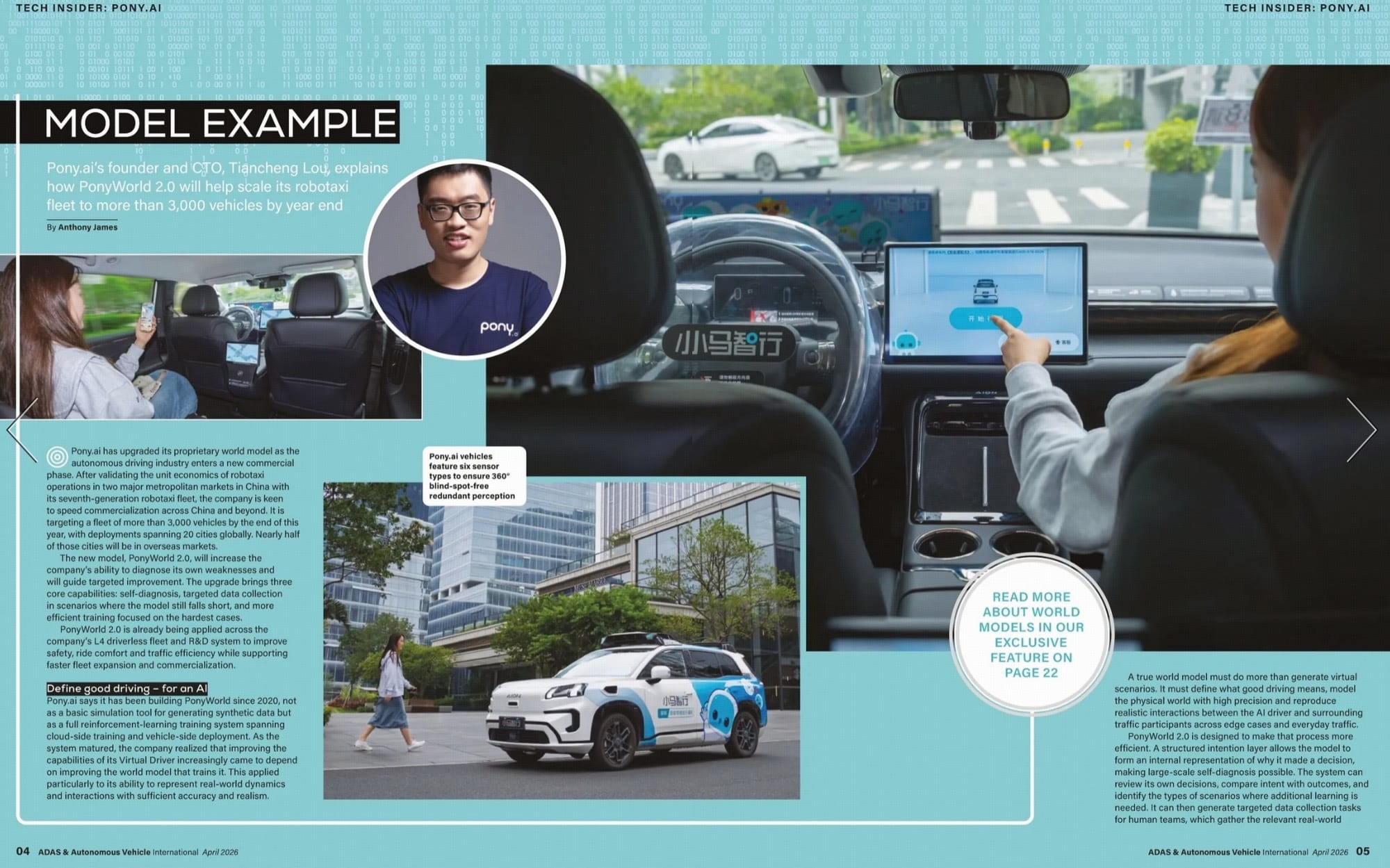
During Auto China 2026, Pony.ai was featured by ADAS & Autonomous Vehicle International in its Tech Insider feature on PonyWorld 2.0.
The interview explored how Pony.ai is advancing L4 autonomous driving from technical validation to large-scale commercialization. Highlighted at Auto China 2026, PonyWorld 2.0 represents a self-improving approach to world modeling, enabling self-diagnosis, targeted data collection, and more efficient training for the most challenging real-world scenarios.
As Pony.ai continues to expand its global Robotaxi fleet, PonyWorld 2.0 is helping make scalable L4 deployment safer, smarter, and more efficient.
Creator Ride-Alongs
Rafa Goes Around
Travel creator Rafa Goes Around featured Pony.ai in his video, China Is Moving Way Too Fast With Self-Driving Cars, documenting his experience trying Pony.ai’s Robotaxi in China. The video centers on a real-world ride in urban traffic, giving viewers a first-hand look at how Pony.ai’s fully driverless technology performs in everyday road conditions and reflecting the rapid pace of China’s autonomous driving development.
BeeRose in China
BeeRose in China featured Pony.ai’s Robotaxi as part of her short-form video, I spent a whole day in China WITHOUT talking to anyone, which explored how everyday services in China can be completed with minimal human interaction. The Robotaxi ride offered a natural example of private, uninterrupted mobility, showing how a fully driverless experience can give passengers their own quiet space while moving through the city.
압권 Apkwon
Korean automotive creator 압권 Apkwon shared a first-hand video experience riding in a Pony.ai Robotaxi in Beijing. The video captured the creator’s real-time reactions to the vehicle’s smooth driving, confident decision-making, and ability to handle complex urban traffic, offering viewers an accessible look at what L4 autonomous mobility feels like in daily use.
eTechvolution
Automotive and e-mobility consultant Hasseb from eTechvolution documented his Pony.ai Robotaxi ride in Beijing, focusing on the passenger experience and the vehicle’s performance in real-world city traffic. The video highlighted the vehicle’s confident navigation through busy road conditions, offering a practical look at the maturity of Pony.ai’s L4 autonomous driving technology.
Looking Ahead
As the global conversation around autonomous mobility continues to accelerate, Pony.ai remains focused on scaling safe, reliable, and efficient L4 autonomous driving technology across more cities and markets. From AI innovation and vehicle cost reduction to international deployment and real-world user experiences, Auto China 2026 offered a snapshot of how fully driverless mobility is moving closer to everyday life.